

The phonotactics of English
The shapes of English words
A hurdle for learners
The phonotactics define what a spoken language allows in terms of the structuring of consonants, vowels, and syllables. Because the phonotactics varies significantly between languages and between varieties of the same language, it falls squarely within the learnability space.
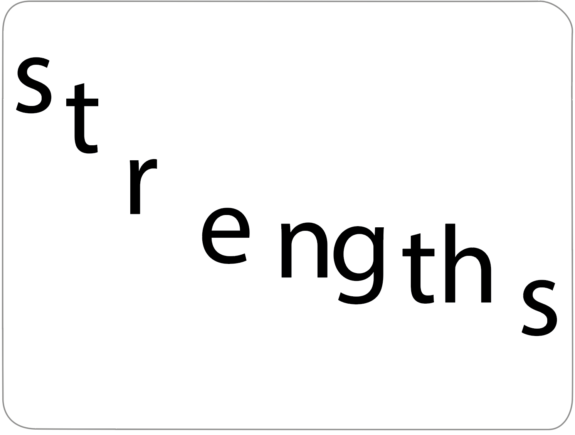
Take the word strength, complex in both the first three sounds and what is written by the last four letters. It is standardly used as a noun, as in ‘amazing strengths’ but such that for many speakers it can be coerced into a verb, as in “She just strengths her way into top jobs without any family connections”. In both cases, strength is the root form before it gets an S added on or ‘suffixed’– as plural when it is used as a noun, but as what is known as a ‘third person singular ‘ when it is ‘coerced’ into a verb with the S on the right edge. The end result is that a phonotactically complex coda is made more complex phonetically by the S suffix.
FAQ: Does this matter?
Yes, because many children, and even some adults, have problems with some word shapes. Then name, Melanie, is just one. It is important to know what these are, like knowing where the rocks are going in and out of a rocky harbour.