Menu Close

My therapy

Has its basis in current linguistic theory and modeling. English has a large inventory of speech sounds, complex syllable structure, phonotactics, and patterns of word stress, relatively rigid word order, simple morphology, and deeper fundamentals, together defining the learnability space in ways that need to be integrated into Speech and Language Therapy.

It is obvious that speech and language are both in the mind and on the lips. But I don’t focus on tongues or lips. We can rehearse a speech in the mind without saying a word. In therapy, work on the mental aspect just has to be balanced against work on the physical aspect.

I believe in being honest about what is possible – in most cases, normal speech – and about the timescale in which this can be realistically achieved. Approximately. Speech and language are not mind over matter, but mind and body. Bodies, and minds, don’t work to schedule. They have schedules of their own.

FAQs – answers from green links

How do I tell if Speech and Language Therapy is necessary?

What is the difference between NHS and private therapy?

How long does therapy take? Does it go on forever?

What are the key milestones?

What happens in a therapy session?

How can I help my child at home?

I offer

Assessment and diagnosis      Training    Treatment   Review and Monitoring   Counselling   Analysis    Work with individuals or groups

For

Families    Children, teenagers, young adults    Commissions from schools, nurseries, preschool, colleges, local authorities, charities, businesses, the prison service

Where there is a difficulty with

Being understood      Saying long words          Putting words together     Speaking fluently     Some sounds   Reading or writing

Like not being able to get words to flow, or not being able to say them clearly, or not having any words, or not wanting to talk at all, or not knowing what it is to play, or if you like,DLD, SLI, CAS, ASD, SM.

This involves

The linguistics of English     Linguistic competence and performance    Linguistic and communicative competence     The phonotactics of English    The phonetics of English     Good English?     Apraxia / Dyspraxia    Fluency    Publications

Focus

I focus on work where I am most qualified – with the commonest disorders. The fact that they are common does not make them simple. I am working on my second PhD in the area.

Uniquenesses

Beyond pigeon holes.

Enquiries welcomed

I aim to respond within at most two working days

Therapy and the common course of events

The individual child has capacities, has rights, and navigates the speech and language pathway by his or her own schedule. This bears on whether a child needs speech and language therapy, and if so, when this should be.

Private6

Possible Words Clinic

Immediate information

NHS:Private

NHS or Private?

What is the difference?

TheCourseOfEvents

Therapy

A common course of events

EngLing

The linguistics of English

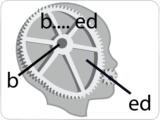
The mechanisms of speaking and understanding the language

LingCompPerform

Linguistic competence and performance

One a clearly defined object of investigation, the other less clear

Linguistic Competence

Linguistic and Communicative Competence

Not at all the same thing

phonotacticsEnglish

The phonotactics of English

The shapes of the words

IPA

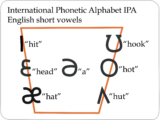
International Phonetic Alphabet, IPA

The Phonetics of English

Seven short vowels

GoodEnglishMicrophone

Good English

Most linguists think that there is no such thing, although it is obvious that some people are more eloquent than others.

ApraxiaDyspraxia

Apraxia / dyspraxia

A frequently made diagnosis

REFERENCES

Publications by Aubrey Nunes

Chapters, theses, papers, talks

Do you have an enquiry?